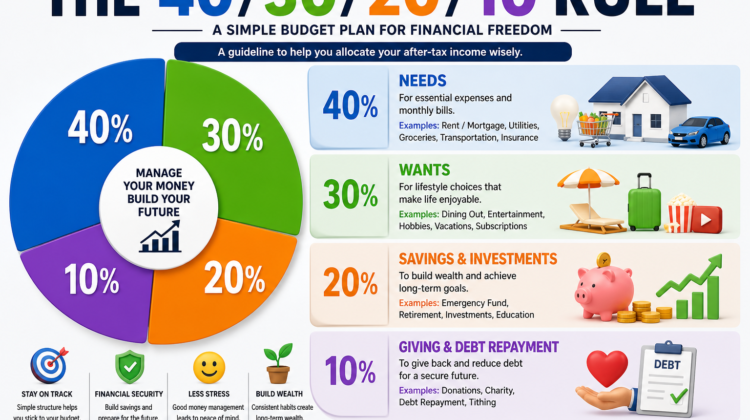
The 40/30/20/10 RULE in Personal Finance.
Managing money doesn’t have to be complicated. In fact, the most effective financial strategies are often the simplest. One such powerful yet easy-to-follow method is the 40/30/20/10 rule. This budgeting framework helps you divide your income into clear categories so you can spend wisely, save consistently, and build long-term wealth without feeling restricted.
If you’ve ever struggled with budgeting, overspending, or saving regularly, this rule can serve as a practical guide to take control of your finances.
💡 What is the 40/30/20/10 Rule?
The 40/30/20/10 rule is a personal finance strategy that divides your after-tax income into four key categories:
- 40% for Needs (Essentials)
- 30% for Wants (Lifestyle)
- 20% for Savings & Investments
- 10% for Debt Repayment or Giving
This structure ensures that you maintain a healthy balance between enjoying your present life and securing your financial future.
🧩 Breaking Down the Rule
🔹 1. 40% – Needs (Essential Expenses)
This portion covers your basic living costs—the expenses you simply cannot avoid.
Examples include:
- Rent or home loan (EMI)
- Groceries
- Utilities (electricity, water, gas)
- Transportation (fuel, public transport)
- Insurance premiums
- Basic healthcare
Why 40%?
Many people unknowingly spend more than half of their income on essentials, leaving little room for savings. By limiting this category to 40%, you’re forced to make smarter choices—like choosing affordable housing or cutting unnecessary utility costs.
🔹 2. 30% – Wants (Lifestyle & Comfort)
This category is all about enjoying life—because financial planning shouldn’t feel like punishment.
Examples include:
- Dining out
- Entertainment (movies, OTT subscriptions)
- Travel and vacations
- Shopping (clothes, gadgets)
- Hobbies and leisure activities
Why 30%?
Completely eliminating fun expenses is unrealistic. This portion allows you to enjoy your income guilt-free while maintaining control.
🔹 3. 20% – Savings & Investments
This is the most important part of the rule. It’s where you build your financial future.
This includes:
- Emergency fund
- Fixed deposits (FDs)
- Mutual funds or SIPs
- Stocks or ETFs
- Retirement accounts (like NPS, PPF)
Why 20%?
Consistently saving and investing at least 20% of your income helps you:
- Build wealth over time
- Beat inflation
- Achieve financial independence
Even if you start small, consistency matters more than the amount.
🔹 4. 10% – Debt Repayment or Giving
This final portion is flexible and depends on your personal situation.
You can use it for:
- Paying off loans (credit cards, personal loans, education loans)
- Donations or charity
- Supporting family members
Why 10%?
It ensures you actively reduce financial liabilities or contribute to meaningful causes without disrupting your budget.
📊 Example: Monthly Income Breakdown
Let’s say your monthly take-home salary is ₹50,000. Here’s how the 40/30/20/10 rule would look:
- Needs (40%) → ₹20,000
- Wants (30%) → ₹15,000
- Savings (20%) → ₹10,000
- Debt/Giving (10%) → ₹5,000
This clear allocation removes confusion and helps you stay disciplined.
🚀 Benefits of the 40/30/20/10 Rule
✔️ 1. Simple and Easy to Follow
You don’t need complex spreadsheets or financial expertise. Just divide and manage.
✔️ 2. Balanced Lifestyle
You can enjoy life today while preparing for tomorrow.
✔️ 3. Encourages Savings Habit
By allocating 20% to savings, you prioritize your future consistently.
✔️ 4. Reduces Financial Stress
Clear budgeting reduces anxiety and helps avoid overspending.
✔️ 5. Flexible and Adaptable
You can tweak percentages slightly based on your situation (e.g., higher savings if you earn more).
⚠️ Common Mistakes to Avoid
Even though this rule is simple, people often make a few mistakes:
❌ Ignoring Needs Limit
Spending more than 40% on essentials can disrupt the entire plan.
❌ Skipping Savings
Many people treat savings as optional—this defeats the purpose of the rule.
❌ Overspending on Wants
Lifestyle inflation (buying more as you earn more) can quickly derail your finances.
❌ Not Tracking Expenses
Without tracking, you won’t know where your money is going.
🛠️ Tips to Make This Rule Work for You
🔸 Track Your Expenses
Use apps or a simple notebook to monitor spending.
🔸 Automate Savings
Set up auto-debits for investments so you don’t skip them.
🔸 Cut Unnecessary Costs
Reduce subscriptions, impulse purchases, and luxury spending.
🔸 Increase Income
Freelancing, side hustles, or skill upgrades can boost your earning power.
🔸 Adjust When Needed
If you have high EMIs, you can temporarily modify the percentages.
🔄 How It Compares to Other Budgeting Rules
You may have heard of the 50/30/20 rule, which is also popular. The key difference is:
- 50% Needs vs 40% in this rule → More disciplined spending
- Addition of a 10% category → Better focus on debt or giving
The 40/30/20/10 rule is slightly stricter, making it more suitable for people who want stronger financial control.
🎯 Who Should Use This Rule?
This rule is ideal for:
- Salaried individuals
- Beginners in personal finance
- Young professionals
- Anyone struggling with saving money
However, if your income is very low or irregular, you may need to adjust the percentages.
🌟 Final Thoughts
The 40/30/20/10 rule is more than just a budgeting formula—it’s a mindset shift. It teaches you to:
- Live within your means
- Save consistently
- Spend wisely
- Plan for the future
Financial success doesn’t come from earning a huge income—it comes from managing what you earn effectively. By following this rule, you create a strong foundation for a stress-free and secure financial life.
Start today. Even small steps can lead to big financial transformations over time.