Russia to Halt Gasoline Exports from April 1 for Four Months to Stabilise Domestic Fuel Prices
|
Getting your Trinity Audio player ready...
|
Introduction
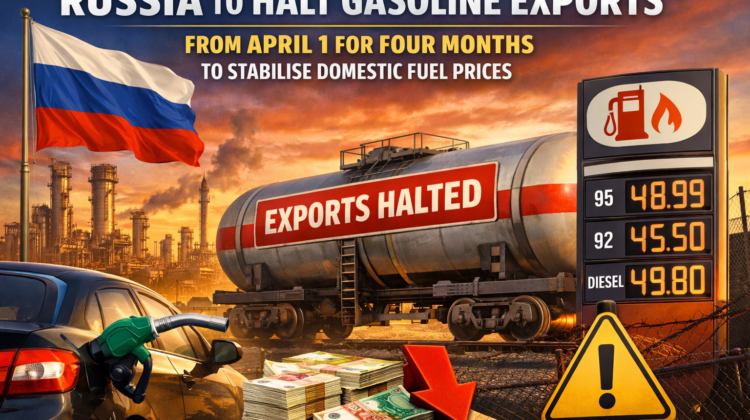
Russia has announced a major move in the global energy market by deciding to halt gasoline exports starting April 1, 2026, for a period of four months. This decision, expected to remain in effect until July 31, 2026, aims to stabilise domestic fuel prices and ensure adequate supply within the country. The move comes at a time when global oil markets are facing extreme volatility due to geopolitical tensions and supply disruptions.
This development is significant not only for Russia but also for global energy markets, as the country is one of the world’s largest oil producers and exporters.
Why Russia is Halting Gasoline Exports
The primary reason behind Russia’s decision is to control rising domestic fuel prices and prevent shortages. According to government officials, the country wants to prioritise its internal energy needs over exports.
Several factors have contributed to this decision:
1. Global Energy Market Volatility
The ongoing crisis in West Asia has led to sharp fluctuations in global oil and fuel prices. These disruptions have made it difficult for countries like Russia to balance domestic supply with international demand.
2. Strong International Demand
Despite global instability, demand for Russian fuel remains high. This has increased pressure on domestic supplies, prompting the government to take corrective action.
3. Domestic Supply Concerns
Russia has experienced fuel shortages in several regions in recent years, partly due to refinery disruptions and seasonal demand spikes.
4. Refinery Disruptions
Attacks on oil infrastructure and logistical challenges have impacted refining capacity, creating supply constraints in the domestic market.
Duration and Scope of the Ban
The gasoline export ban will:
- Begin on April 1, 2026
- Continue until July 31, 2026
- Apply specifically to gasoline exports
- Not affect crude oil exports
The Russian government has clarified that refinery operations remain stable and domestic fuel reserves are sufficient to meet internal demand during this period.
Impact on Russia’s Domestic Market
Stabilising Fuel Prices
The biggest expected benefit of this move is price stability in the domestic fuel market. By restricting exports, more gasoline will be available within Russia, reducing upward pressure on prices.
Preventing Shortages
Fuel shortages have been a recurring issue in some Russian regions. The export ban is expected to:
- Increase local availability of gasoline
- Support agricultural and transportation sectors
- Ensure smooth supply during peak demand seasons
Supporting Economic Stability
Fuel prices directly impact inflation and economic activity. By controlling gasoline prices, the Russian government aims to maintain economic stability and protect consumers.
Global Impact of Russia’s Export Ban
Reduced Global Supply
Russia exported nearly 5 million metric tons of gasoline in 2025, making it a significant supplier in global markets.
A temporary halt in exports could:
- Tighten global gasoline supply
- Push prices higher in some regions
- Increase competition among importing countries
Impact on Oil Prices
While the ban applies only to gasoline, it could indirectly affect crude oil markets by influencing refining demand and trade flows.
Global oil prices have already been volatile due to geopolitical tensions, including disruptions in key supply routes and conflicts in oil-producing regions.
Shift in Trade Dynamics
Countries that rely on Russian fuel exports may need to:
- Find alternative suppliers
- Pay higher prices
- Adjust energy strategies
This could reshape global fuel trade patterns in the short term.
Historical Context: Russia’s Past Export Restrictions
This is not the first time Russia has imposed restrictions on fuel exports. The country has previously implemented similar measures to control domestic prices and address shortages.
- In 2025, Russia temporarily restricted gasoline exports during peak demand seasons
- Export bans have often been used as a tool to stabilise internal markets
These actions highlight a consistent strategy: prioritising domestic energy security over export revenue during times of crisis.
Role of Geopolitics in the Decision
Geopolitical tensions have played a crucial role in shaping Russia’s energy policy.
West Asia Crisis
The ongoing conflict in West Asia has disrupted global oil supply chains, leading to:
- Price spikes
- Supply uncertainties
- Increased demand for alternative energy sources
Russia-Ukraine Conflict
Attacks on Russian oil infrastructure have significantly impacted production and export capacity, further complicating the situation.
These geopolitical factors have forced Russia to adopt a more cautious and defensive approach to its energy exports.
What This Means for India and Other Countries
India, being a major energy importer, could also feel the indirect impact of Russia’s decision.
Possible Effects on India:
- Slight increase in global fuel prices
- Higher import costs
- Increased reliance on alternative suppliers
However, since the ban is on gasoline and not crude oil, the direct impact on India may be limited.
Expert Opinions and Market Outlook
Energy experts believe that the export ban is a short-term stabilisation measure rather than a long-term policy shift.
Key Expectations:
- Domestic prices in Russia will stabilise
- Global markets may experience temporary pressure
- The situation could normalise after July 2026
If geopolitical tensions ease, Russia may resume exports and restore balance in the global market.
Conclusion
Russia’s decision to halt gasoline exports from April 1 for four months is a strategic move aimed at protecting its domestic fuel market amid global uncertainty. By prioritising internal supply and stabilising prices, the country is addressing immediate economic and energy challenges.
While the move may create short-term disruptions in global fuel markets, it underscores the importance of energy security in times of geopolitical instability. As the situation evolves, the global energy landscape will continue to adapt to these shifting dynamics.